






ICD-10 Code C20: Malignant Neoplasm of the Rectum

ICD-10-CM code C20 is used to classify malignant neoplasm of the rectum, a serious form of colorectal cancer that requires precise diagnosis, documentation, and medical coding. Accurate use of this code is essential for patient care, treatment planning, compliance, and reimbursement.
This guide explains what ICD-10 code C20 means, when to use it, common symptoms, related codes, coding guidelines, and frequent errors to avoid—making it a practical reference for healthcare providers, medical coders, and billing professionals.
What Is ICD-10 Code C20?
ICD-10-CM code C20 represents malignant neoplasm of the rectum, meaning a cancerous tumor originating in the rectal tissues.
This code is part of the International Classification of Diseases, 10th Revision, Clinical Modification (ICD-10-CM), the standard diagnostic coding system used across the United States for clinical documentation, insurance claims, and health data reporting.
Use C20 when:
- The primary cancer site is confirmed to be the rectum
- The diagnosis is supported by clinical findings, imaging, or pathology
Detailed Description: Malignant Neoplasm of the Rectum
The rectum is the final portion of the large intestine, connecting the sigmoid colon to the anus. A malignant neoplasm of the rectum typically begins in the epithelial cells lining the rectal wall and may progressively invade nearby tissues, lymph nodes, or distant organs.
Rectal cancer is often discussed alongside colon cancer and collectively referred to as colorectal cancer. However, rectal tumors present unique clinical challenges due to their proximity to pelvic organs, nerves, and sphincter muscles—making accurate diagnosis and coding especially critical for appropriate treatment planning.
Common Symptoms Associated With ICD-10 Code C20
Symptoms of rectal cancer can vary by stage and may overlap with less serious gastrointestinal conditions. Common signs include:
- Rectal bleeding or blood in the stool
- Persistent changes in bowel habits (diarrhea, constipation, narrowing of stools)
- Sensation of incomplete bowel evacuation
- Abdominal or pelvic pain and cramping
- Unexplained weight loss
- Fatigue, weakness, or anemia
Clinical note: Because these symptoms are nonspecific, diagnostic confirmation (e.g., colonoscopy, biopsy, imaging) is required before assigning code C20.
Related and Similar ICD-10 Codes
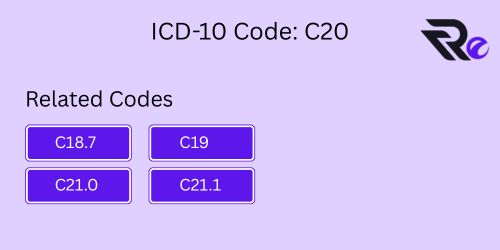
Selecting the correct ICD-10 code depends on the exact anatomical location of the malignancy. Codes commonly related to C20 include:
| ICD-10 Code | Description |
|---|---|
| C18.7 | Malignant neoplasm of sigmoid colon |
| C19 | Malignant neoplasm of rectosigmoid junction |
| C21.0 | Malignant neoplasm of the anus, unspecified |
| C21.1 | Malignant neoplasm of the anal canal |
| C21.2 | Malignant neoplasm of the cloacogenic zone |
👉 Tip: Do not use C20 for anal or sigmoid tumors—misclassification can impact treatment decisions and reimbursement.
ICD-10 Coding Guidelines for C20
To ensure accurate and compliant coding, follow these best practices:
1. Documentation Requirements
- The diagnosis must be clearly documented by a provider or confirmed through pathology reports.
- Include tumor location, staging (if available), and treatment intent.
2. Specificity Matters
- Assign additional codes for:
- Metastatic sites
- Complications
- History of cancer, when applicable
3. Correct Sequencing
- Code the primary malignancy first when it is the main reason for the encounter.
- If a secondary (metastatic) site is the focus of care, code that site first, followed by C20.
4. Stay Updated
- Always reference the latest ICD-10-CM Official Guidelines to remain compliant with annual updates.
Common Coding Errors to Avoid
Even experienced coders may encounter pitfalls when using ICD-10 code C20:
- Incorrect anatomical site selection (rectum vs. colon or anus)
- Incomplete clinical documentation, leading to undercoding
- Failure to report metastases, resulting in inaccurate claims
- Using outdated coding guidelines
Avoiding these errors improves data accuracy, supports medical necessity, and reduces claim denials.
Key Resources for Accurate C20 Coding
Trusted resources for staying current and compliant include:
- ICD-10-CM Official Guidelines for Coding and Reporting
- American Health Information Management Association (AHIMA)
- American Academy of Professional Coders (AAPC)
- Centers for Medicare & Medicaid Services (CMS)
- National Cancer Institute (NCI) – clinical insights on rectal cancer diagnosis and treatment
Frequently Asked Questions
What does ICD-10 code C20 stand for?
ICD-10 code C20 represents malignant neoplasm of the rectum, indicating a cancer that originates in rectal tissue.
Is rectal cancer coded the same as colon cancer?
No. Rectal cancer uses C20, while colon cancers use C18.x codes, depending on the specific location.
Can C20 be used for metastatic rectal cancer?
Yes, but secondary malignancy codes must also be assigned to reflect metastatic sites.
How do I differentiate between C19 and C20?
- C19: Rectosigmoid junction
- C20: Rectum only
Accurate provider documentation is essential.
Does ICD-10 code C20 include anal cancer?
No. Anal cancers are coded under C21.x.
Conclusion:
ICD-10-CM code C20 plays a vital role in accurately identifying and managing malignant neoplasm of the rectum. Proper use supports:
- High-quality patient care
- Appropriate treatment planning
- Accurate billing and reimbursement
- Reliable health data reporting
By understanding the clinical definition, related codes, documentation requirements, and common coding pitfalls, healthcare professionals and medical coders can ensure compliant and precise coding.