






ICD-10 Code R06.02: Shortness of Breath (Dyspnea)

ICD-10-CM code R06.02 is used to document and bill for shortness of breath, also known clinically as dyspnea, when no more specific diagnosis has been confirmed. This symptom-based code plays an important role in early evaluation, clinical decision-making, and accurate medical billing across emergency, outpatient, and inpatient settings.
This guide explains what R06.02 means, when to use it, how to code it correctly, and common documentation mistakes to avoid—helping clinicians, coders, and billing professionals stay compliant and audit-ready.
What Is ICD-10 Code R06.02?
R06.02 is a billable ICD-10-CM diagnosis code found in:
- Chapter 18: Symptoms, signs, and abnormal clinical and laboratory findings, not elsewhere classified
- Category: R06 – Abnormalities of breathing
It represents shortness of breath, a patient-reported symptom that may vary in intensity and cause.
This code is appropriate when shortness of breath is the primary reason for the encounter and no definitive underlying condition has yet been established.
Clinical Description of Shortness of Breath (R06.02)
Shortness of breath is a subjective sensation of breathing discomfort. Patients may describe it differently depending on severity, duration, and underlying contributors.
Dyspnea can be associated with:
- Respiratory conditions
- Cardiovascular disorders
- Anxiety or panic-related symptoms
- Deconditioning or exertion intolerance
Because it spans multiple systems, accurate documentation is essential to justify the use of R06.02 and guide further evaluation.
Common Symptoms Associated With R06.02
Patients coded with R06.02 may report:
- Difficulty breathing or “air hunger”
- Chest tightness or pressure
- Rapid or shallow breathing
- Shortness of breath with minimal activity
- Fatigue or exhaustion related to breathing effort
Documenting symptom onset, duration, triggers, and severity strengthens medical necessity and supports coding accuracy.
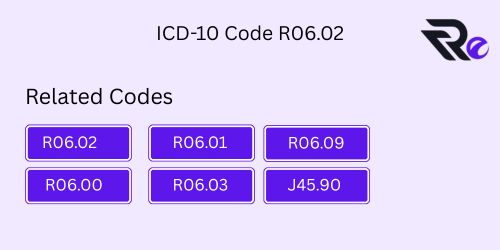
Related and Similar ICD-10-CM Codes
Selecting the most specific code improves clinical clarity and reimbursement accuracy.
| ICD-10 Code | Description |
|---|---|
| R06.02 | Shortness of breath |
| R06.00 | Dyspnea, unspecified |
| R06.01 | Orthopnea |
| R06.03 | Acute respiratory distress |
| R06.09 | Other forms of dyspnea |
| J45.909 | Unspecified asthma, uncomplicated |
Best practice: Use R06.02 only when shortness of breath is clearly documented and not better explained by a more specific diagnosis.
Appropriate Use of R06.02 for Billing
R06.02 should be reported when:
- Shortness of breath is the primary symptom evaluated
- The cause has not yet been definitively diagnosed
- Clinical evaluation, monitoring, or management is required
Documentation should reflect:
- Patient-reported symptoms
- Relevant physical exam findings
- Diagnostic tests ordered or reviewed
- Clinical reasoning for continued evaluation
Once a definitive diagnosis (e.g., asthma, heart failure, pneumonia) is established, R06.02 should be replaced with the more specific code.
Coding Guidelines and Excludes1 Notes for R06.02
ICD-10-CM Instructional Guidance
R06.02 falls under Chapter 18 guidelines, which emphasize using symptom codes only when a confirmed diagnosis is unavailable.
Excludes1 Conditions (Do NOT Code With R06.02)
If any of the following conditions are diagnosed, R06.02 must be omitted:
- Acute respiratory distress syndrome (J80)
- Respiratory arrest (R09.2)
- Respiratory arrest of newborn (P28.81)
- Respiratory distress syndrome of newborn (P22.–)
- Respiratory failure (J96.–)
- Respiratory failure of newborn (P28.5)
An Excludes1 note means the two conditions cannot be reported together.
Common Coding Pitfalls With R06.02
Avoid these frequent errors:
- Using R06.02 as a catch-all without adequate documentation
- Failing to differentiate between dyspnea types (e.g., orthopnea vs. acute distress)
- Continuing to code R06.02 after a definitive respiratory or cardiac diagnosis is confirmed
- Ignoring Excludes1 guidelines
Accurate coding supports patient safety, reimbursement, and data integrity.
Authoritative Resources for R06.02 Coding
- ICD-10-CM Official Guidelines for Coding and Reporting
- Centers for Medicare & Medicaid Services (CMS)
- American Health Information Management Association (AHIMA)
- Clinical Documentation Improvement (CDI) programs
These resources help ensure consistent and compliant use of symptom-based codes.
Frequently Asked Questions
What does ICD-10 code R06.02 mean?
R06.02 represents shortness of breath (dyspnea) when no specific underlying diagnosis has been confirmed.
Is R06.02 a billable ICD-10 code?
Yes. R06.02 is a billable and valid ICD-10-CM code.
When should R06.02 not be used?
R06.02 should not be used when a definitive diagnosis such as respiratory failure, ARDS, or asthma is documented.
What is the difference between R06.02 and R06.00?
R06.02 specifies shortness of breath, while R06.00 is used when dyspnea is documented but not further described.
Can R06.02 be used in emergency settings?
Yes. R06.02 is commonly used in emergency and urgent care settings during initial evaluation.
Conclusion:
ICD-10-CM code R06.02 is essential for accurately documenting and billing for shortness of breath when a definitive diagnosis is not yet known. Correct use requires detailed clinical documentation, awareness of related codes, and strict adherence to ICD-10-CM guidelines.