





What Are Patient Demographics in Medical Billing?

Patient demographics are critical in medical billing. Accurate demographic patient information ensures proper insurance verification, claim submission, and timely reimbursement. Understanding what constitutes patient demographic data helps reduce claim denials and improves revenue cycle efficiency.
What Is Considered Demographic Information?
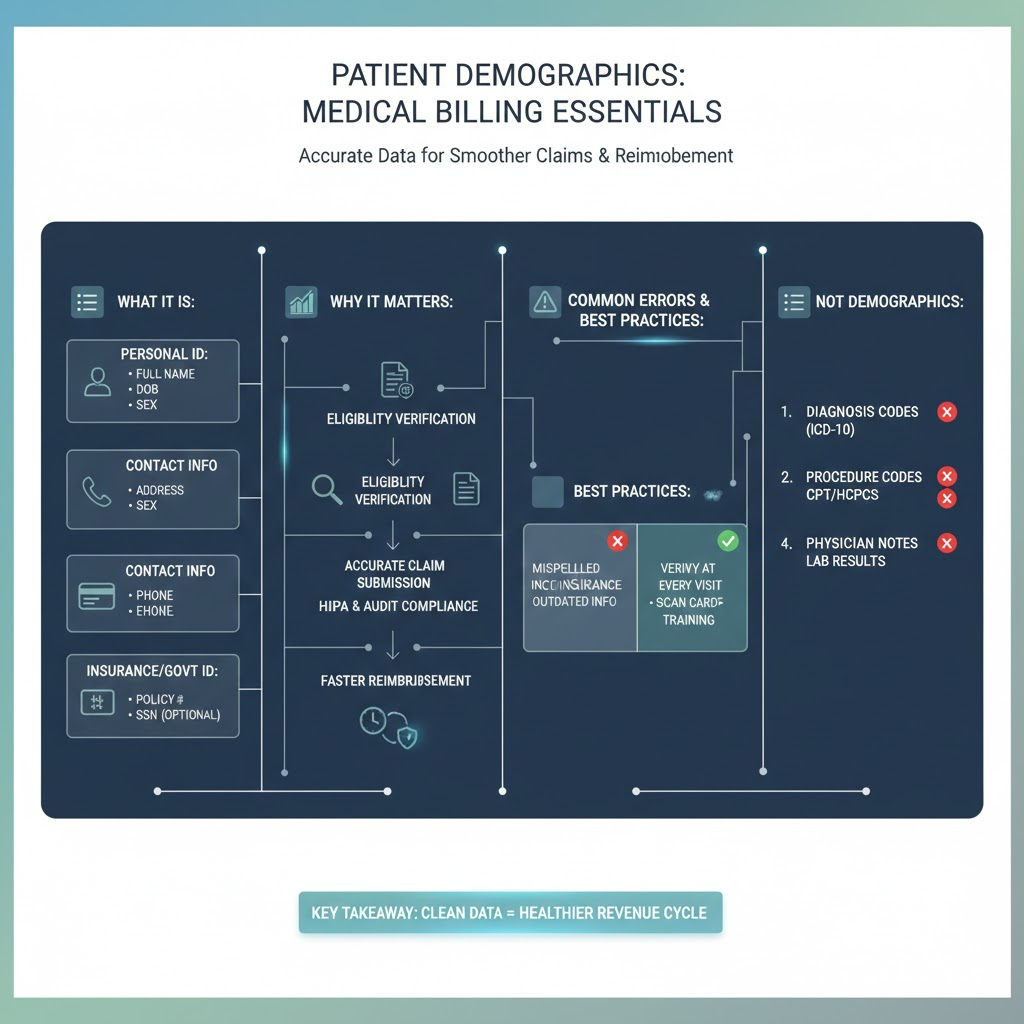
Patient demographic information includes non-clinical details that identify the patient and support billing. This information is collected at registration and used throughout the billing process.
Core Patient Demographics
| Category | Examples |
|---|---|
| Personal Identification | Full name, date of birth, sex |
| Contact Information | Address, phone number, email |
| Insurance Identifiers | Policy number, subscriber name |
| Government Identifiers | Social Security Number (if required) |
| Emergency Details | Emergency contact name & relationship |
Examples of Patient Demographics
Common examples of patient demographics used in medical billing:
- Full legal name
- Date of birth
- Gender/sex
- Home address and ZIP code
- Primary phone number
- Insurance subscriber name and relationship
- Insurance plan ID and group number
Accurate entry of these details is essential for claim approval.
Real also This: Free ICD-10 Glossary
Why Patient Demographics Matter
Accurate patient demographic data impacts all stages of medical billing:
- Insurance eligibility verification: Confirms coverage and plan information.
- Claim submission: Ensures claims are matched to payer records.
- Compliance and auditing: Supports HIPAA compliance and internal audits.
- Faster reimbursement: Reduces rejections and denials.
Which of the Following Is Not Considered Patient Demographics?
Patient demographics describe the patient, not the care they receive.
Not Patient Demographics:
- Diagnosis codes (ICD-10)
- Procedure codes (CPT/HCPCS)
- Physician notes
- Lab results
Patient Demographics:
- Name
- Date of birth
- Address
- Insurance information
- Contact information
Where Patient Demographic Data Is Used
Patient demographic data is collected once but used across the revenue cycle:
- Patient registration
- Insurance verification
- Charge entry
- Claim submission
- Denial management
- Patient billing statements
Errors early in the process can cause claim delays and denials.
Common Errors and Best Practices
Frequent Errors:
- Misspelled names
- Nicknames instead of legal names
- Incorrect insurance subscriber
- Outdated addresses
- Wrong date of birth
- Gender mismatches
Best Practices:
- Verify demographics at every visit
- Scan insurance cards
- Use standardized intake forms
- Train staff regularly
- Perform pre-claim eligibility checks
FAQs
1. What is patient demographic data in medical billing?
Personal and identifying information such as name, date of birth, address, and insurance details used for claim submission.
2. What is considered demographic information?
Non-clinical details that identify a patient, including contact information, insurance data, and subscriber relationships.
3. Why are patient demographics important in medical billing?
They ensure accurate insurance verification, clean claims, regulatory compliance, and timely reimbursement.
4. Which of the following is not considered patient demographics?
Diagnosis codes, procedure codes, and treatment notes.
5. How often should patient demographic information be updated?
At every patient visit, especially before insurance verification and claim submission.
6. Can incorrect patient demographics cause claim denials?
Yes, demographic errors are a leading cause of claim rejections and denials.
Summary
Patient demographics are foundational to medical billing. Accurate demographic patient data reduces claim errors, ensures proper insurance verification, and supports faster reimbursements. Maintaining clean, up-to-date information at every touchpoint in the revenue cycle is essential for a successful billing process.